
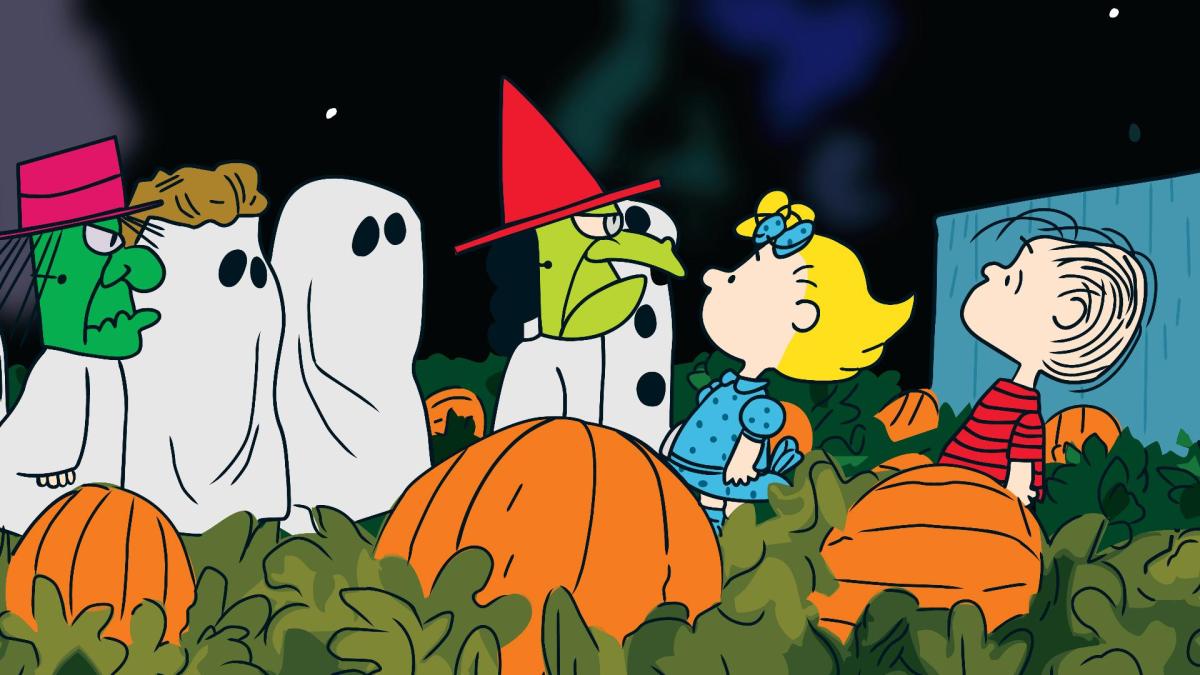
Should Christians Observe Halloween?

Each year, when the leaves turn and fall to the ground, as the days grow shorter and the winds begin to howl, I am asked the same question: Should Christians observe Halloween? Indeed, this is a serious question from well-meaning, faithful people, not to be taken lightly.

This blog is dedicated to helping men follow Jesus, but today’s post is designed to reach a broader audience while also equipping men to discuss this topic with their families and friends.

______________________

Each year, when the leaves turn and fall to the ground, as the days grow shorter and the winds begin to howl, I am asked the same question: Should Christians observe Halloween? Indeed, this is a serious question from well-meaning, faithful people, not to be taken lightly. While I have written on this subject before, it’s appropriate to revisit the question from a historical and theological perspective, particularly as American culture drifts further from its Christian memory.

The Origins of Halloween

Is Halloween a continuation of the pagan festival, Samhain (SOW-in)? Marking the end of the harvest season and the beginning of a new year, the ancient Celts observed this festival to welcome the dark half of the year.

The ancient Celts believed that during this season, the…veil between the seen and unseen realms became thin. Because of this thinning, the spirits could easily cross between the realms and enter our world. For this reason, the Celts would offer up food and drink to the spirits, and occasionally an animal sacrifice to appease them as well. It was also believed that the souls of the departed would revisit their homes seeking hospitality.[1]

I think we’d be hard-pressed, in our American culture, to see Christians (even spiritually immature Christians) making animal sacrifices or welcoming departed spirits into their homes. So, what are the origins of Halloween?

“Halloween” is simply a contraction for All Hallows’ Eve. The word “hallow” means “saint,” in that “hallow” is just an alternative form of the word “holy” (“hallowed be Thy name”). All Saints’ Day is November 1. It is the celebration of the victory of the saints in union with Christ. The observance of various celebrations of All Saints arose in the late 300s, and these were united and fixed on November 1 in the late 700s. The origin of All Saints Day and of All Saints Eve in Mediterranean Christianity had nothing to do with Celtic Druidism or the Church’s fight against Druidism…[2]

Halloween has always been distinctively Christian. Since the earliest days of the Christian movement, the Church has sought to bring all things under the lordship of Jesus. “The way Christianity has done this is through the paradigm of bless, baptize, or burn.”[3] When the missional church encountered a pagan ritual that could be redeemed for Jesus, it baptized and accepted it. So, if missionaries did encounter Samhain, they chose to redeem it for the gospel.

Consequently, the church saw the birth of All Saints Day, and its Eve (All Hallows’ Eve). “The Biblical day begins in the preceding evening, and thus in the Church calendar, the eve of the day is the actual beginning of the festive day (i.e., Christmas Eve). All Saints Eve precedes All Saints Day.”[4] On All Saints Day, the Church remembers Christians who have recently died and joined the Church Triumphant.

Spiritual Implications

As a person who believes in the unseen realm and who has personally encountered its manifestation in the physical realm, I think the Church must consider the theological implications of observing All Hallows Eve and All Saints Day. The defeat of evil, Satanic powers, is associated with Halloween.

The Festival of All Saints reminds us that though Jesus has finished His work, we have not finished ours. He has struck the decisive blow, but we have the privilege of working in the mopping-up operation. Thus, century by century the Christian faith has rolled back the demonic realm of ignorance, fear, and superstition…The concept, as dramatized in Christian custom, is quite simple: On October 31, the demonic realm tries one last time to achieve victory, but is banished by the joy of the Kingdom.[5]

How is the demonic realm vanquished? Jordan suggests it is by mockery. “Satan’s great sin (and our great sin) is pride. Thus, to drive Satan from us we ridicule him…because he has lost the battle with Jesus and he no longer has power over us.”[6] Ancient Christian cathedrals included gargoyles with their tongues sticking out as a way to mock the defeated spiritual enemy. Martin Luther famously posted his 95 Theses on the door of the Wittenberg Chapel on Halloween to ridicule the devil’s schemes and initiate the Reformation of the Church. Additionally, the tradition of dressing children in costumes emerged as a way to celebrate the complete defeat of Satan by Jesus Christ. We have NO FEAR!

The mockery that occurs at Halloween is a mockery rooted in our union with Christ (Romans 5:1-5) and in what he has done. He has disarmed the rulers and principalities and has put them to shame, triumphing over them (Colossians 1:15-23). Because of our union with Him, we are participating…in a covenant mockery that is united to Christ.[7]

Should Christians Observe Halloween?

We now return to our main question. While you may want a clear answer, the truth is that it depends on your conscience. For many people, celebrating Halloween is not just about decorations, costumes, or candy. It reflects how Halloween is viewed in today’s American culture.

Unfortunately, many discussions about Halloween tend to judge those who celebrate it. Some Christians focus too much on the holiday’s negative sides and adopt a strict viewpoint.

We need to remember that most people—both Christians and non-Christians—who celebrate Halloween are not engaging in occult practices or worshipping demons. Families who take their kids trick-or-treating or go to fall parties are not looking for ghosts or playing with Ouija boards. For them, it is just a fun day centered around the fall season.

Regardless of our feelings about Halloween, we should avoid being judgmental. If we criticize others, we miss chances to connect with them and share the gospel. Halloween can open doors for conversation and outreach. For example, events like Trunk-or-Treat bring many families together and can be a way for Christians to connect with their communities.

That said, there are real concerns about the occult, and the church should be aware of it. The Bible warns against practices like necromancy, divination, and witchcraft. Jesus’ victory over evil is good news for those who fear spirits or get involved in the occult. Many modern pagans and Wiccans see Halloween as a special night when the barrier between the living and the dead is thin. Their rituals, which involve communicating with the dead, should concern believers because they go against God’s Word, unlike trick-or-treaters just looking for candy. Whether we choose to celebrate Halloween or not, we must remember that Jesus has already defeated evil—He is stronger than any demons or dark powers.

The Bible gives us guidance on how to view holidays. The Apostle Paul spoke about Christian freedom and offered guidance for observing holidays. He reminded the Roman believers that some saw meat sacrificed to idols as off-limits, while others did not. Some regarded certain days as more special than others. Instead of taking sides, Paul focused on the freedom we have in Christ, emphasizing that believers should aim to honor God and uplift others (Romans 14:5-6, 19). Those who felt comfortable eating meat sacrificed to idols could do so with a clear conscience but should also consider how their decisions would affect others. Ultimately, love for God and for fellow believers should come first.

Christians today can learn from this idea of freedom in Christ. We can choose to celebrate holidays or skip them; neither choice is better than the other. We shouldn’t force our choices on fellow believers. Those in the early church who felt they could eat meat offered to idols respected others who viewed the food as unclean (Romans 14:13-15).

Celebrating the joys and blessings of the season can honor God. We can appreciate the excitement of children dressing up and collecting candy from neighbors. Enjoying time with friends, picking and carving pumpkins, is also a blessing. Furthermore, Jesus’ victory over evil gives us many reasons to be thankful.


[1]Robinson, Josh. Re-enchanting Time: A Primer on How Christ’s Lordship Ren-enchants Time-Keeping. Haven Press. Cleveland, OH, 2025. Page 71.

[2] Mocking Christ’s Enemies: A Defense of Halloween. James B. Jordan. Mocking Christ’s Enemies: A Defense of Halloween – Gospel Spam

[3] Robinson. Page 78.

[4] Ibid. Page 74.

[5] Jordan.

[6] Ibid.

[7] Robinson. Page 77.
The Mockery of the Cross: Jesus’ Final Words and Victory

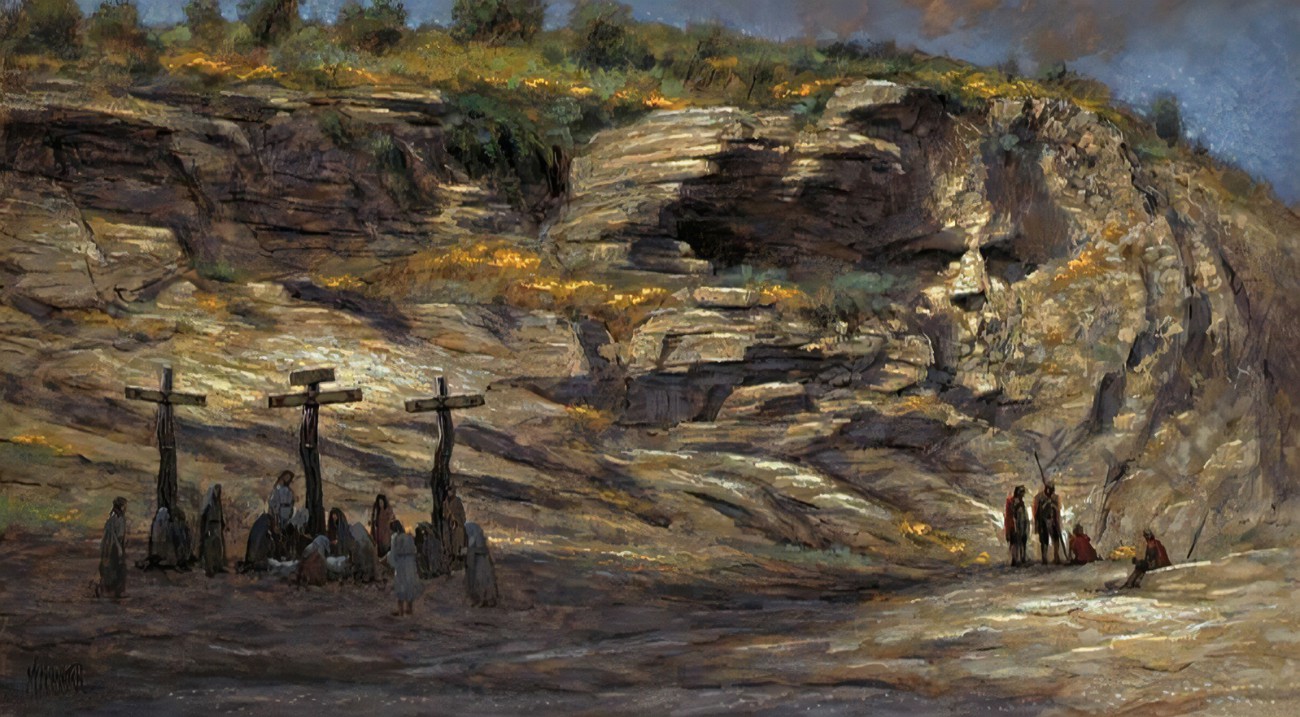
Cruel and mocking words followed Jesus to his death: “King of the Jews… Come down from the cross, if you are the Son of God… He saved others, but he can’t save himself!” It may not have been surprising that he faced rejection in the end; after all, these were the same people who had turned away from him during his life. However, what likely made his death even more painful were the words he didn’t hear. He heard nothing from the Father—no words at all. Mocked. Forsaken. Abandoned. Alone. Jesus died.

To onlookers, it seemed as if it was all for nothing. Jesus appeared to be just another crucified man, lifeless on the side of the road.

Yet, what no one could see was what was happening on the other side. Once mocked, Jesus now triumphs over Death itself. “Death has been swallowed up in victory. Where, O death, is your victory? Where, O death, is your sting? The sting of death is sin, and the power of sin is the law. But thanks be to God! He gives us the victory through our Lord Jesus Christ” (1 Corinthians 15:54-57).

On a hill far away, where the tree of death once stood, now stands the Tree of Life.

The Jesus Way of Masculinity

While fully God, Jesus was also fully human. His humanness was incarnated in the masculine. Understanding who Jesus was as a man provides insight into how men can live out and model masculine characteristics as created by God.

I’m beginning a new series called The Jesus Way of Masculinity. While fully God, Jesus was also fully human. His humanness was incarnated in the masculine. Understanding who Jesus was as a man provides insight into how men can live out and model masculine characteristics as created by God.

The place where we begin, though, is not with Jesus. We’ll begin with Adam. The Genesis narrative describes “first things.” These first actions of God detail his creative design from chaos to order. Included in God’s creative design are people, specifically, male and female. Both are created as equal image bearers of God. Both sexes speak something about God’s nature. And. Both sexes reveal something about their responsibilities in creation.

The male – Adam had a defined responsibility to work alongside God in creation. Prior to fulfilling his responsibilities, it’s important to see that Adam’s entire life was given to him as a gift from God. Genesis 2:7 (NIV) reads, “Then the LORD God formed a man from the dust of the ground and breathed into his nostrils the breath of life, and the man became a living being.” This life-giving breath of God communicates that Adam’s entire life was predicated on the life given to him by the Creator. This life-giving breath suggests Adam’s inheritance as a son of God and led to his responsibilities in creation. Genesis chapter 2 highlights Adam’s role:

  • His responsibilities occur in a defined place – the Garden
  • He was to work and care for the Garden
  • He was responsible for his obedience to God’s commands
  • He named the animals
  • He recognized Eve as part of himself
  • He committed himself to her

We see Adam as being clearly created by God for a purpose. He was to manage God’s place on the earth, rule over creation (naming of animals), and nurture his relationships. All of this was intended to honor God in the way that Adam (and Eve) were the image bearers of God in the Garden and on Earth.

Very shortly, though, we discover that the original order was destroyed by original sin. Adam failed to fulfill his responsibility to nurture his wife and nurture his dominion over the earth instead choosing to rebel against God’s design. The rest of the story involves banishment and the beginning of God’s redemptive story climaxing in the incarnation of Jesus.

In Romans 5:12-21, the Apostle Paul contrasts the roles of Adam and Jesus. Adam failed to fulfill his image-bearing role which led to the “death” of all of creation. Jesus, and his “one righteous act” (5:18) bring justification. In other words, Jesus’ obedience had the potential to bring life back to all of creation. In short, I would suggest that Jesus, as the image-bearer of God, fulfilled the things at which Adam failed.

In general, we can apply this to the masculine role – you are an image bearer of God. Certainly, this applies to women as well. Genesis 1 seems to be clear on this reality.  But men cannot shirk this responsibility. The absence of men as image bearers of God in creation is a troubling reality in the 21st century. Many men flee any conversation about God or Christianity. Maybe this has occurred because of the deep feminization of the church and Christianity, but it’s not an excuse.

As an image bearer, men are called to take up the responsibility for revealing the presence of God in every facet of society and take back the ground lost to the enemy. This isn’t militant, nor is it Dominion Theology. It is the created nature of men, who, redeemed by Jesus and filled with the Holy Spirit, fulfilling the intended purpose of the masculine.

So, an initial aspect of fulfilling the Jesus Way of Masculinity begins with a Christian man owning his call as an image-bearer of God and exerting influence over the direction of creation for the glory of God and the coming of the Kingdom.

Keep Your Head When Everyone is Losing Theirs

The measure of manhood may well be keeping your head when everyone around you is losing theirs.

In 1895, Rudyard Kipling wrote the timeless poem, “If.” The first stanza implores us to “keep our heads” when everyone around us is losing theirs.

“If you can keep your head when all about you   
    Are losing theirs
…”

Did Kipling have a time machine? Did he somehow travel to 2020 and quickly escape back to the nineteenth century to write this warning for future generations?

If there is any word which describes 2020, “insanity” would be at the top of many lists. This past week has been no exception. It’s been exhausting, frustrating, and painful at many levels.

Someone has said, “elections have consequences.” All too often the personal consequences are dire. I stayed up way too late Tuesday night (I’m embarrassed to say it was actually Wednesday morning). I thought if I stayed awake I could somehow influence things. So Wednesday I was stressed. My jaw seemed clenched all day. I was so lost in my own thoughts and in such a fog that I found myself ignoring conversations and meaningful interaction with my own family. I found myself glued to the news cycle and talk radio. I kept refreshing my social media for the latest developments. The more I listened and watched the more pain I experienced. I know better. You know better. THIS IS NOT HEALTHY! I was getting sucked into the insanity.

Finally I had to make a decision. It was like facing my addiction all over again. Is this how I want to live? Is this what I want to consume my precious time and relationships? I took action and changed my mind. It’s been a better week since then.

This is what has worked for me, maybe these will help you.

  1. Turn it off. I broke the chain of the 24 hour news cycle. I turned off the TV, the radio, and I set a schedule for when I interacted with social media.
  2. Pick it up. I picked up a book that always inspires and heals me and I read.
  3. Connect. I spent time with a mentor. I reconnected with my friends. And we didn’t talk politics! We encouraged and cared for one another.
  4. Go outside. This week in the northeast has been beautiful. High temperatures and sunshine. Go walk, play, get some vitamin D.
  5. Refocus. What happens next nationally is really out of my hands. I like control but I can’t control this. But what I can control is how I respond. I chose to respond by getting refocused on my “Why.” I choose to double down on my purpose and mission for life. When I focus my mental energy and my actions on what I want to achieve, the noise of insanity vanishes.

Your life is yours to control. You make the most important decisions of your life. You are the constant. You can either be pulled into other people’s insanity, or you can chart your own course.

Kipling ends his poem with this stanza:

If you can talk with crowds and keep your virtue,   
    Or walk with Kings—nor lose the common touch,
If neither foes nor loving friends can hurt you,
    If all men count with you, but none too much;
If you can fill the unforgiving minute
    With sixty seconds’ worth of distance run,   
Yours is the Earth and everything that’s in it,   
    And—which is more—you’ll be a Man, my son!

The measure of manhood may well be keeping your head when everyone around you is losing theirs. Live well.