Should Christians Observe Halloween?

Each year, when the leaves turn and fall to the ground, as the days grow shorter and the winds begin to howl, I am asked the same question: Should Christians observe Halloween? Indeed, this is a serious question from well-meaning, faithful people, not to be taken lightly.

This blog is dedicated to helping men follow Jesus, but today’s post is designed to reach a broader audience while also equipping men to discuss this topic with their families and friends.

______________________

Each year, when the leaves turn and fall to the ground, as the days grow shorter and the winds begin to howl, I am asked the same question: Should Christians observe Halloween? Indeed, this is a serious question from well-meaning, faithful people, not to be taken lightly. While I have written on this subject before, it’s appropriate to revisit the question from a historical and theological perspective, particularly as American culture drifts further from its Christian memory.

The Origins of Halloween

Is Halloween a continuation of the pagan festival, Samhain (SOW-in)? Marking the end of the harvest season and the beginning of a new year, the ancient Celts observed this festival to welcome the dark half of the year.

The ancient Celts believed that during this season, the…veil between the seen and unseen realms became thin. Because of this thinning, the spirits could easily cross between the realms and enter our world. For this reason, the Celts would offer up food and drink to the spirits, and occasionally an animal sacrifice to appease them as well. It was also believed that the souls of the departed would revisit their homes seeking hospitality.[1]

I think we’d be hard-pressed, in our American culture, to see Christians (even spiritually immature Christians) making animal sacrifices or welcoming departed spirits into their homes. So, what are the origins of Halloween?

“Halloween” is simply a contraction for All Hallows’ Eve. The word “hallow” means “saint,” in that “hallow” is just an alternative form of the word “holy” (“hallowed be Thy name”). All Saints’ Day is November 1. It is the celebration of the victory of the saints in union with Christ. The observance of various celebrations of All Saints arose in the late 300s, and these were united and fixed on November 1 in the late 700s. The origin of All Saints Day and of All Saints Eve in Mediterranean Christianity had nothing to do with Celtic Druidism or the Church’s fight against Druidism…[2]

Halloween has always been distinctively Christian. Since the earliest days of the Christian movement, the Church has sought to bring all things under the lordship of Jesus. “The way Christianity has done this is through the paradigm of bless, baptize, or burn.”[3] When the missional church encountered a pagan ritual that could be redeemed for Jesus, it baptized and accepted it. So, if missionaries did encounter Samhain, they chose to redeem it for the gospel.

Consequently, the church saw the birth of All Saints Day, and its Eve (All Hallows’ Eve). “The Biblical day begins in the preceding evening, and thus in the Church calendar, the eve of the day is the actual beginning of the festive day (i.e., Christmas Eve). All Saints Eve precedes All Saints Day.”[4] On All Saints Day, the Church remembers Christians who have recently died and joined the Church Triumphant.

Spiritual Implications

As a person who believes in the unseen realm and who has personally encountered its manifestation in the physical realm, I think the Church must consider the theological implications of observing All Hallows Eve and All Saints Day. The defeat of evil, Satanic powers, is associated with Halloween.

The Festival of All Saints reminds us that though Jesus has finished His work, we have not finished ours. He has struck the decisive blow, but we have the privilege of working in the mopping-up operation. Thus, century by century the Christian faith has rolled back the demonic realm of ignorance, fear, and superstition…The concept, as dramatized in Christian custom, is quite simple: On October 31, the demonic realm tries one last time to achieve victory, but is banished by the joy of the Kingdom.[5]

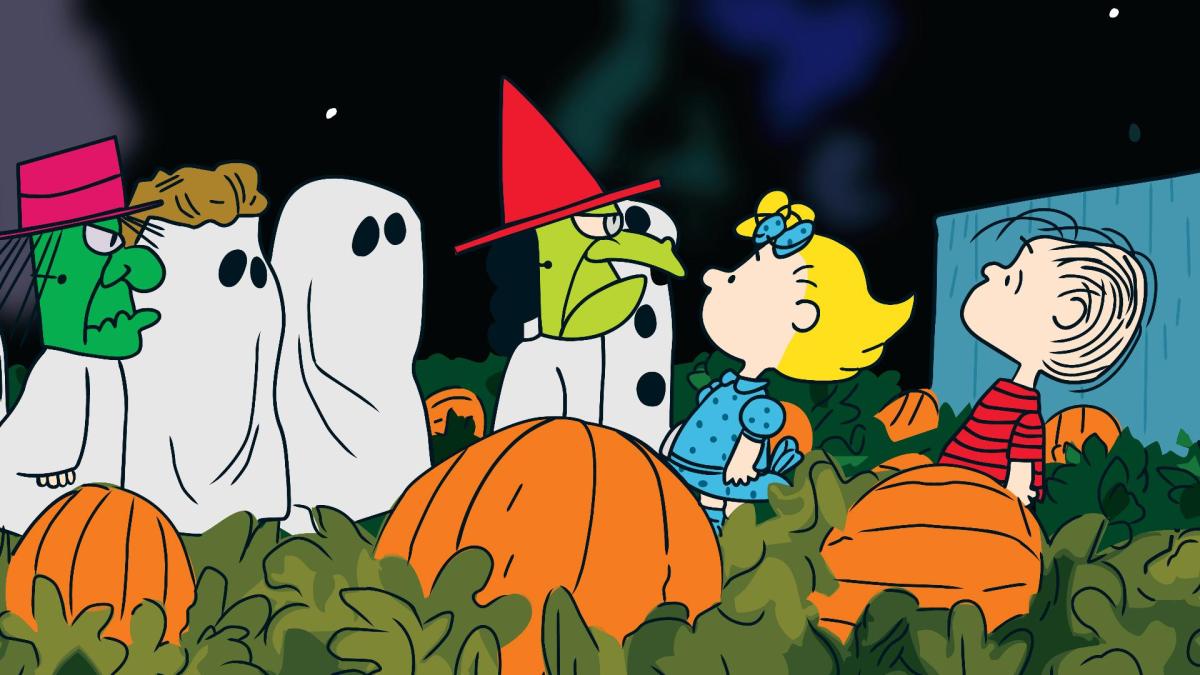
How is the demonic realm vanquished? Jordan suggests it is by mockery. “Satan’s great sin (and our great sin) is pride. Thus, to drive Satan from us we ridicule him…because he has lost the battle with Jesus and he no longer has power over us.”[6] Ancient Christian cathedrals included gargoyles with their tongues sticking out as a way to mock the defeated spiritual enemy. Martin Luther famously posted his 95 Theses on the door of the Wittenberg Chapel on Halloween to ridicule the devil’s schemes and initiate the Reformation of the Church. Additionally, the tradition of dressing children in costumes emerged as a way to celebrate the complete defeat of Satan by Jesus Christ. We have NO FEAR!

The mockery that occurs at Halloween is a mockery rooted in our union with Christ (Romans 5:1-5) and in what he has done. He has disarmed the rulers and principalities and has put them to shame, triumphing over them (Colossians 1:15-23). Because of our union with Him, we are participating…in a covenant mockery that is united to Christ.[7]

Should Christians Observe Halloween?

We now return to our main question. While you may want a clear answer, the truth is that it depends on your conscience. For many people, celebrating Halloween is not just about decorations, costumes, or candy. It reflects how Halloween is viewed in today’s American culture.

Unfortunately, many discussions about Halloween tend to judge those who celebrate it. Some Christians focus too much on the holiday’s negative sides and adopt a strict viewpoint.

We need to remember that most people—both Christians and non-Christians—who celebrate Halloween are not engaging in occult practices or worshipping demons. Families who take their kids trick-or-treating or go to fall parties are not looking for ghosts or playing with Ouija boards. For them, it is just a fun day centered around the fall season.

Regardless of our feelings about Halloween, we should avoid being judgmental. If we criticize others, we miss chances to connect with them and share the gospel. Halloween can open doors for conversation and outreach. For example, events like Trunk-or-Treat bring many families together and can be a way for Christians to connect with their communities.

That said, there are real concerns about the occult, and the church should be aware of it. The Bible warns against practices like necromancy, divination, and witchcraft. Jesus’ victory over evil is good news for those who fear spirits or get involved in the occult. Many modern pagans and Wiccans see Halloween as a special night when the barrier between the living and the dead is thin. Their rituals, which involve communicating with the dead, should concern believers because they go against God’s Word, unlike trick-or-treaters just looking for candy. Whether we choose to celebrate Halloween or not, we must remember that Jesus has already defeated evil—He is stronger than any demons or dark powers.

The Bible gives us guidance on how to view holidays. The Apostle Paul spoke about Christian freedom and offered guidance for observing holidays. He reminded the Roman believers that some saw meat sacrificed to idols as off-limits, while others did not. Some regarded certain days as more special than others. Instead of taking sides, Paul focused on the freedom we have in Christ, emphasizing that believers should aim to honor God and uplift others (Romans 14:5-6, 19). Those who felt comfortable eating meat sacrificed to idols could do so with a clear conscience but should also consider how their decisions would affect others. Ultimately, love for God and for fellow believers should come first.

Christians today can learn from this idea of freedom in Christ. We can choose to celebrate holidays or skip them; neither choice is better than the other. We shouldn’t force our choices on fellow believers. Those in the early church who felt they could eat meat offered to idols respected others who viewed the food as unclean (Romans 14:13-15).

Celebrating the joys and blessings of the season can honor God. We can appreciate the excitement of children dressing up and collecting candy from neighbors. Enjoying time with friends, picking and carving pumpkins, is also a blessing. Furthermore, Jesus’ victory over evil gives us many reasons to be thankful.


[1]Robinson, Josh. Re-enchanting Time: A Primer on How Christ’s Lordship Ren-enchants Time-Keeping. Haven Press. Cleveland, OH, 2025. Page 71.

[2] Mocking Christ’s Enemies: A Defense of Halloween. James B. Jordan. Mocking Christ’s Enemies: A Defense of Halloween – Gospel Spam

[3] Robinson. Page 78.

[4] Ibid. Page 74.

[5] Jordan.

[6] Ibid.

[7] Robinson. Page 77.

Your Boys Shall Be Kings

Boys need strong masculine influence, especially from their fathers. But, the truth is, most men must also acknowledge their lack of strong, influential fathers.

I’m republishing my article from a few years ago. I think it still resonates.

_________

There is a war on the masculine soul. Many boys are growing up with no real masculine influence. Gender confusion is rising. In many places (homes, offices, institutional churches), a Feminist worldview is blocking the male energy. Just within the last year or two, a father in Texas lost his lawsuit to keep his son’s mother from raising the boy as a female. Before we fully see the damage among men and boys in our Western culture, it may be another generation.

Boys need strong masculine influence, especially from their fathers. But, the truth is, most men must also acknowledge their lack of strong, influential fathers.

You may regret that your dad was absent from your development. You may have missed the relationship you saw other boys have with their dads. Maybe you wished that your dad threw a ball with you, listened to your questions about girls or cars, or cared about what you wanted to be when you grew up.

For some men, there is a dad-shaped hole in their lives. John Eldredge writes, “Every boy on his journey to becoming a man takes an arrow in the center of his heart, in the place of his strength. Because the wound is rarely discussed and rarely healed, every man carries a wound. And the wound is nearly always given by his father.”

During the early quarantine of the Covid pandemic, my youngest son took up skateboarding. He got pretty good. So for Christmas, he wanted a snowboard. I was hesitant. He’d never snowboarded before. He watched some YouTubers and thought it would be fun. I told him it was nothing like skateboarding. But he was determined.

So, he got a snowboard.

That weekend we hit the slopes. He hurried to the ski lift and rode it up a moderate hill. Until then, he had only practiced on a small hill in our yard. This slope was formidable for a beginner. He stepped onto his board and nudged to the edge of the mountain. As I watched from below, I saw him push off…and fall! Then I saw him get up, get his balance and go again. He fell. He fell just about all the way down the hill.

When he reached the bottom, I could see frustration and disappointment on his face. He had forgotten how long it took him to balance his skateboard and learn those techniques. I could see the disconnect in his eyes. “I can skate. Why isn’t it working on slopes?”

As he sat at the bottom of the hill, I knew this was an influential moment. So rather than an “I told you so,” I said, “Good try.” His response? “I think I’ll try a smaller hill.” I agreed. He boarded for two hours. Falling often. But encouraged frequently. “Bend your knees. Keep your head up. Give it another try.” By the following weekend, he was cruising! He returned to the hill that gave him his first defeat and boarded down without falling! He’s getting better.

What would have happened if I did say, “I told you so. You’ll never get this. Pack it in!” Those words would have been an arrow through his heart. He would live with a deep wound.

Masculinity is bestowed from one man to another. From a man to a boy. From a father to a son. A boy learns who he is and what he’s got from a man. He cannot learn it from a woman. He cannot learn it from other boys. The father must bless his son, conferring masculinity upon him. Then boys will become kings.

A sad reality is that many men are walking around trying to find the blessing their father never gave them. Men are looking for help, respect, and guidance – a picture of real masculinity – never given to them, thus crippling their growth from boyhood to manhood. You may be one of those men.

The curse can stop with you! You may be crippled, creeping through life without your father’s blessing. That hurts! It can be undone but will require focused work and significant mentoring by other men. But you must not pass this on to your sons. Stop the bleeding. Bless your boy.

How will you get this done? Here’s what’s always worked. Use this as a starting point.

  1. Time spent makes a world of difference. Looking back on my own life, I have few memories of time spent with my father.

Some of the most recent research suggests that the average dad spends seven minutes daily on focused attention. That’s not going to get it done! Absenteeism may cause your son to feel emotionally distressed, guilty, or sad. Over time, a lack of attention could lead your son into risky behavior.

  • Blaze some trails together. Share an adventure. Walking through the woods is bonding time well spent. In ancient cultures, there was the belief that a boy only becomes a man through ritual and effort. There is a story from one tribal tradition where the men take the boys away for initiation. They are taken away from their mothers and into the woods. When he returns, the mother pretends not to know her son and asks to be introduced to “this young man.” What a beautiful picture of passage from boyhood into manhood. The son moves from his mother’s world to his father’s world.
  • Show them how to be strong. My boys loved the wrestling matches on the living room floor when they were younger. They’d come and jump on me, hungering for a challenge and physical touch. They’d try and pin me down. As they got older (and stronger), it was arm wrestling. Boys love to test their strength.

Your strength will inspire them. They’ll care for themselves in the way they see you care for yourself. Your strength and confidence will inspire them.

  • Help them discover their purpose. We no longer have the gift of apprenticeship built into our culture. There were days when boys could learn a valuable craft that would produce a remarkable career. But boys still need help discovering their gifts and purpose.

We talk about this often in my house. We see the value not only in education but in living life with purpose, finding a way to do what you love pivoting when necessary. My boys have always been encouraged to try many new experiences. Sometimes their choices have surprised me, but I appreciate their willingness to try.

The war on the masculine soul is real. Boys and men are on the front line every day. We are in the battle whether we want to be or not.  Save your son and give him a fighting chance!

A boy will never be a man if his masculinity is stripped from him. The world is full of men who have never been initiated into manhood. Don’t miss the chance you have.

The Boy I Was, the Man I Will Be

Reflection is a vital practice, especially at this stage of life. Many men lose themselves in the routine of daily life. They forget to assess who they are. They also forget to evaluate who they want to be. Don’t let that be your story.

A Call to Action for Men in the Second Half of Life

As I recently went through my old journals, I was flooded with memories and reflections. My entries began in 1989 when I was twenty. Back then, I was just a boy on the verge of becoming a man, filled with dreams and optimism. I hadn’t journaled before. The encouragement of Christian friends inspired me to put pen to paper. This act would become a profound part of my growth.

Today, I reflect on those early entries through the lens of my experiences. I realize that this journey has shaped me. I am still becoming the man I aspire to be. I want to share some insights with you. They may inspire your own journey. You are navigating this important stage of life.

– Rekindle Your Innocence: Remember the days when life felt simpler. Your faith was untainted by the complexities of adulthood. Embrace that innocence again! It’s never too late to pursue dreams with that same fervor and clarity. Let go of the cynicism that may have crept in over the years.

– Revisit Your Commitment: Think back to your early passion—when your commitment to your beliefs and values was fresh. That fire is still within you, waiting to be reignited. Draw strength from your values and let them guide your actions today.

– Be Bold in Your Pursuits: Life can present challenges that feel daunting. Now is not the time to retreat. Embrace your calling with courage. The strength gained through experience equips you to take bold risks and pursue your purpose with confidence.

– Stay Humble and Teachable: The learning never stops. Be open to the lessons that life presents. Allow yourself to grow in wisdom, and stay eager for the things that add depth and meaning to your life.

As I reflected on my past, I confronted the reality that my perspective has shifted over time. While the challenges I’ve faced have often led to cynicism, those experiences have profoundly shaped me. Yet, with awareness comes empowerment—the opportunity to change direction.

Reflection is a vital practice, especially at this stage of life. Many men lose themselves in the routine of daily life. They forget to assess who they are. They also forget to evaluate who they want to be. Don’t let that be your story. When life becomes overwhelming, strive to keep your composure and purpose.

Reading through my journals reignited a desire within me to reclaim the passion I had in my youth. If I’m to thrive in the next chapter of my life, it’s time to awaken from the slumber of complacency. I am determined to shed negativity. I will embrace a renewed sense of holiness. This is not a quiet meekness but a fiery passion. It propels me toward my calling.

Think of resilience—like Russell Crowe in Robin Hood. As he rises to face challenges, we too can make a commitment. We can “rise and rise again until lambs become lions” in this crucial part of our lives.

So here’s my challenge to you: Start journaling if you haven’t already. Chronicle your thoughts, aspirations, and the lessons learned along the way. Revisit those entries and track your personal growth. Pay close attention to what ignites your passion and blends seamlessly with your purpose. If you find yourself drifting off course, it’s time to make some changes.

You are worth the effort. Reclaim those dreams from your youth, and embrace the man you are destined to become.

Let go of the baggage that has accumulated over the years. Confess your struggles, seek forgiveness, and allow the Holy Spirit to awaken the fire within you. If you’ve lost your path, now is the moment to remember who you once wanted to be. Take the time to make a plan, seek guidance, and take that all-important first step.

Let’s rise together, not just for ourselves but for the lives we have yet to touch—rise and rise again!

Today’s simple thought…

Men in the second half of life find themselves uniquely positioned to keep their integrity and model discipleship for younger followers of Jesus.

Let me know what you think.

Personal Well-Being for Ministry Leaders

Sustainable leadership isn’t just about doing more; it’s about protecting what truly matters and caring for yourself in the process.

In the demanding world of ministry, leaders often lose sight of their personal lives. They get caught up in their professional commitments. This blurring of boundaries can lead to exhaustion and diminished effectiveness, which is a heavy burden for anyone to bear. Establishing clear boundaries means setting specific limits on time, energy, and responsibilities. This practice is essential for maintaining personal well-being. It also enhances the ability to make a meaningful impact in the lives of others. Without these protective measures, the threat of burnout can loom large. It deeply affects individual leaders. It can also impact the entire congregation they serve.

This issue is not just theoretical; current statistics reveal a troubling reality. By 2025, it is estimated that 40% of pastors will be at high risk for burnout. This is a staggering increase of 400% from the 11% recorded in 2015. Additionally, 42% of pastors have seriously considered leaving ministry altogether, clearly illustrating the intense pressures they face. Loneliness can add to these challenges, with 65% of pastors reporting feelings of isolation, and 18% feeling this way frequently.

Studies from organizations like Barna and Lifeway highlight the unique vulnerabilities that ministry leaders experience. These vulnerabilities are often due to the expectation of being available around the clock. The emotional labor required in their roles also contributes to these challenges.

It’s essential to understand why boundaries are important. They prevent feelings of resentment. They offer opportunities for spiritual renewal. They create a model of healthy living for those around us. Jesus understood this necessity. He stepped away for prayer amidst the chaos of His ministry. We see this in Luke 5:16. His example shows that taking time for rest is not a sign of weakness. Instead, it is sacred. It is also an essential part of our life’s work.

To support leaders in establishing healthier practices, here’s a four-step Rebound plan that will resonate:

1. Assess and Define: Each week, carve out time to evaluate your schedule. Find your non-negotiables—be it family time, personal rest, or Sabbath moments—and communicate these openly. This transparency helps foster understanding and support.

2. Delegate and Prioritize: Acknowledge that it’s okay to share the load. Identify tasks that others can take on to free you up for your core calling. Tools like to-do lists can help clarify your priorities and keep you focused on what truly matters.

3. Practice Self-Care: Ensure you dedicate time each day to activities that nourish your physical, emotional, and spiritual health. You can do this through exercise, hobbies that bring you joy, or even seeking professional support. Consider finding a coach for accountability; it can make a significant difference.

4. Review and Adjust: At the end of each month, take a thoughtful moment. Reflect on what’s working. Consider what could be improved. Celebrate even the small wins, as they can help build momentum and motivate you to keep going.

By embracing these boundaries, ministry leaders can find paths to thrive, serving with renewed passion and purpose. Sustainable leadership isn’t just about doing more; it’s about protecting what truly matters and caring for yourself in the process. Remember, you are not alone in this journey. Taking these steps can lead to a healthier, more fulfilling ministry experience.

The Danger of Jesus’ Resurrection

Resurrection is dangerous! Jesus is not safe. The physical, bodily resurrection of Jesus will challenge you at the very depth of your soul. The resurrection of Jesus changes everything!

There is an annual event in Australia called the Festival of Dangerous Ideas.  A couple of years ago they included a Q&A time with some panelists surrounding the question – “what dangerous idea has the greatest potential to change the world for the better?”  Several panelists answered that question in unique but logical ways based upon their worldview.  And then the question was directed to Peter Hitchens and his answer clearly startled the others.  “The most dangerous idea in human history and philosophy remains the belief that Jesus Christ was the son of God and rose from the dead, and that is the most dangerous idea you will ever encounter.”

The moderator didn’t appear to understand the danger of the resurrection and so asked “why dangerous?”  To which Hitchens responded: “Because it alters the whole of human behavior and all our responsibilities.  It turns the universe from a meaningless chaos into a designed place in which there is justice and there is hope and, therefore, we all have a duty to discover the nature of justice and work towards that hope.  It alters us all.  If we reject it, it alters us all as well.  It is incredibly dangerous.  It’s why so many people turn against it.” 

He was right.  The physical and bodily resurrection of Jesus from the dead is the most dangerous idea.  If true, it changes everything.  Chocolate bunnies and marshmallow peeps have no eternal value or significance!  Resurrection changes everything. Resurrection isn’t soft and cuddly.  Resurrection is dangerous. 

I’m afraid we aren’t aware of just how dangerous it is.  Christian philosopher Stephen Davis says: “Christians today do not seem to be astonished at the idea of resurrection (after 2000 Easters, we seem to have gotten used to the idea), but we ought to be.” If, as a Jesus follower, the most dangerous idea of all ideas doesn’t rock your world, then maybe your faith is too safe.  And if you’re not a follower of Jesus, welcome to Christianity’s dangerous idea!

Paul spent much of his life trying to destroy the dangerous idea of Christianity until he had a life-altering encounter with the resurrected Jesus.  He went from killing Christians (ISIS) to being a Christian pastor.  In 1 Corinthians he writes about the implications of following Jesus. Paul shows us why resurrection is so dangerous. 

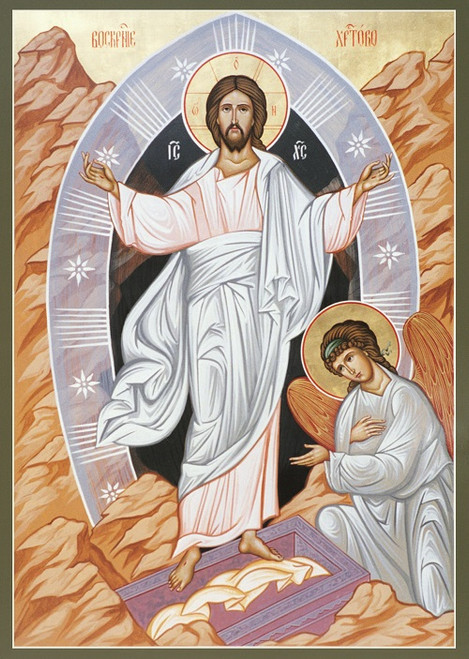
The resurrection of Jesus turns the world upside down.   Jesus had been arrested, beaten, and executed. One thing the Powers That Be can’t tolerate is being rejected and so they rejected Him! They killed Him. End of story. But then, something extraordinary happened. God said, “Uh, No. That isn’t the end of the story!” And though He was indeed good and dead, God amazingly and graciously resurrected Jesus – back to life!

The guards who’d been posted at the tomb ran to tell the chief priests what had happened. Their lives were in jeopardy for failing to prevent the tomb from being opened. To break the Roman seal that had been placed at the entrance to the tomb was against the Emperor’s law and punishable by death.

Jesus showed Himself to those disciples of His who had run away in fear and when they experienced Him and recognized the nail marks on His hands, they came out of hiding! Until they encountered the Risen Christ, they viewed the world the way others did.  But when they saw Him risen and alive, they unlocked the doors, came out, and began turning the world upside down! They knew another reality that was bolder, truer, and stronger than the powers that had been paralyzing them with fear. Jesus had risen!

The resurrection of Jesus deals with the problem of death.  One quarter of the gospel accounts focus on the death of Christ. Plenty of other information was left out so that we would grasp the death of Jesus Christ. Jesus did not die as a good example; He did not die because He was a nice martyr; Jesus Christ died for our sins. Sin is a concept one doesn’t hear a lot in our culture today. We hear about illnesses, addictions, and disorders, but we don’t hear much about sin. Yet, the truth is: Jesus Christ died on the cross for the sins of every man, woman, and child that has ever lived. Sin is the reason Jesus went to the cross.

Christ had to die because you and I were in trouble with God. What puts us in trouble with God is our sin. Just so that there is no doubt, let me clarify what sin is: Sin is anything contrary to the character and commandments of God. To boil down this definition even further, sin is merely leaving God out and failing to worship Him properly.

Jesus Christ died for our sins.  He was our substitute.  A substitute is a person who takes the place of another. We should have died for our sins but Jesus died in our place. Jesus took your place that you might have His place. He took your hell that you might have His heaven. That is His substitutionary death. It is the heart of the gospel. Jesus’ life does not save us. His teaching does not save us. He saves us by His death on the cross. There is no other way to get rid of our sins. The good news of the gospel is that when Christ died for our sins, He died for our past, present, and future sins. He covered all of our sins for all time. Are you having trouble forgiving yourself for sins you have committed? Remember, Christ’s death was sufficient for your sins. His death satisfied God’s wrath against sin. 

When you buy something at a store, the clerk accepts your money and gives you a receipt confirming that the bill was paid in full. If there is ever a dispute about whether the payment was made, all you have to do is produce your receipt. The payment for sin that God demanded has been paid, and the empty tomb is proof that the payment was received and the debt satisfied. The resurrection is our “receipt” from God the Father that He accepted His Son’s payment for sin on the cross

In the resurrection of Jesus, God keeps his word.  Paul does not try to prove that the resurrection of Jesus actually happened. Instead, he assumes the resurrection as fact. In these verses, he simply wants us to know that Christ has risen from the dead. The gospel still works today. As Christians what we really need is to be reminded of what we already know. We need to preach the gospel to ourselves every day. When we do this, we experience a new surge of life and love for Christ.

Paul reminds his readers of what the gospel is. The term “gospel” means “good news.” This is the message that Paul preached to the Corinthians for the eighteen months he served as their pastor. Paul is writing with the confidence that the Corinthians are believers. “For I delivered to you as of first importance what I also received, that Christ died for our sins according to the Scriptures, and that He was buried, and that He was raised on the third day according to the Scriptures, and that He appeared to Cephas, then to the twelve.” An important phrase immediately jumps out: “according to the Scriptures.” In the Old Testament, God predicted that Christ would die and rise again. One of the strongest arguments that Jesus is the Christ is how He fulfilled Old Testament prophecy.

This gospel was “of first importance” and foundational to everything else in the Christian life. It isa non-negotiable. The reason for this is the gospel did not originate from Paul or any other man; rather it was received from God and then delivered to people. It is God’s gospel, not ours. No one would have ever devised a plan of salvation like this one, for mankind always tries to obtain salvation the old-fashioned way—“to earn it.” But the good news of the Christian gospel is that salvation is a free gift—costly to Christ but free to us.

The resurrection of Jesus requires a response.  The great tightrope walker Blondin strung a wire from one side of the Niagara Falls to the other. A crowd gathered to watch him attempt to walk out over the deadly falls. The silent tension turned to cheers as they watched him walk out, turn and come back. He asked the crowd, “How many believe that I can walk to the other side and back while pushing a wheelbarrow?” To which they shouted, “We believe, we believe!” And, Blondin did in fact walk out and back with a wheelbarrow. Upon his return, Blondin asked, “Who believes I could push a man in this wheelbarrow while walking out and back on the wire?” Again the crowd responded with enthusiastic affirmation. “OK,” he asked, “Who would like to get in?” The crowd fell silent.

Trusting Jesus is not simply assenting to the facts of the gospel message, there is a decision that implies actually getting into the wheelbarrow. The proof of the resurrection is its dangerous power to change lives. The gospel centers on Jesus Christ, not Buddha, not Mohammed. God wants to know: what are you going to do with My Son, Jesus? Responses such as: “I go to church every week and I’m a good father or mother” have nothing to do with the gospel. The gospel centers on Jesus Christ.  Each of us must give a response to the resurrection.  And it may be no!  I reject the resurrection.  But you’re response may very well be – I believe that God raised Jesus from the dead; I love Jesus and I want to follow him – welcome to the revolution!  Your relationship with Jesus changes everything. 

Silent Saturday: The Day Between Death and Resurrection

Silent Saturday. That’s what we’ve come to call the second day, the day between crucifixion and resurrection. For the followers of Jesus left behind to grieve and prepare his body for burial, it must have been an odd day. What should they do? Cry? Hide? Leave? What do we do in the numbing silence hours after a loved one dies? They rested and wondered what was next.

But what about Jesus? Physically, there was rest. His body lay in the tomb. Spiritually, however, something else was happening.

Upon his death, Jesus’ spirit descended to Sheol (Hades). Sheol is the biblical concept of death prior to Jesus’ resurrection. When he died, Jesus went to the place of death. Sheol is where both the faithful and the unfaithful waited. The faithful awaited the Messiah to rescue them, as referenced in Psalm 139, Romans 10:7, and Luke 16.

When Jesus descended to Sheol, he was truly experiencing death. He was really dead! He remained under the power of death. Holy Saturday reminds us that Jesus entered death and stayed dead. The gap was long enough for him to genuinely taste death (Hebrews 2:9) and to endure the anguish of being in death’s grip (Acts 2:24). He fully entered the land from which no one returns, undertaking the profound loneliness of death as part of his mission to redeem us. His disciples experienced his death as if it were permanent. Remarkably, this is good news for us.

Just as Jesus took our sins, he has also taken all our lonely dying upon himself. Let the gap be the gap.

The Mockery of the Cross: Jesus’ Final Words and Victory

Cruel and mocking words followed Jesus to his death: “King of the Jews… Come down from the cross, if you are the Son of God… He saved others, but he can’t save himself!” It may not have been surprising that he faced rejection in the end; after all, these were the same people who had turned away from him during his life. However, what likely made his death even more painful were the words he didn’t hear. He heard nothing from the Father—no words at all. Mocked. Forsaken. Abandoned. Alone. Jesus died.

To onlookers, it seemed as if it was all for nothing. Jesus appeared to be just another crucified man, lifeless on the side of the road.

Yet, what no one could see was what was happening on the other side. Once mocked, Jesus now triumphs over Death itself. “Death has been swallowed up in victory. Where, O death, is your victory? Where, O death, is your sting? The sting of death is sin, and the power of sin is the law. But thanks be to God! He gives us the victory through our Lord Jesus Christ” (1 Corinthians 15:54-57).

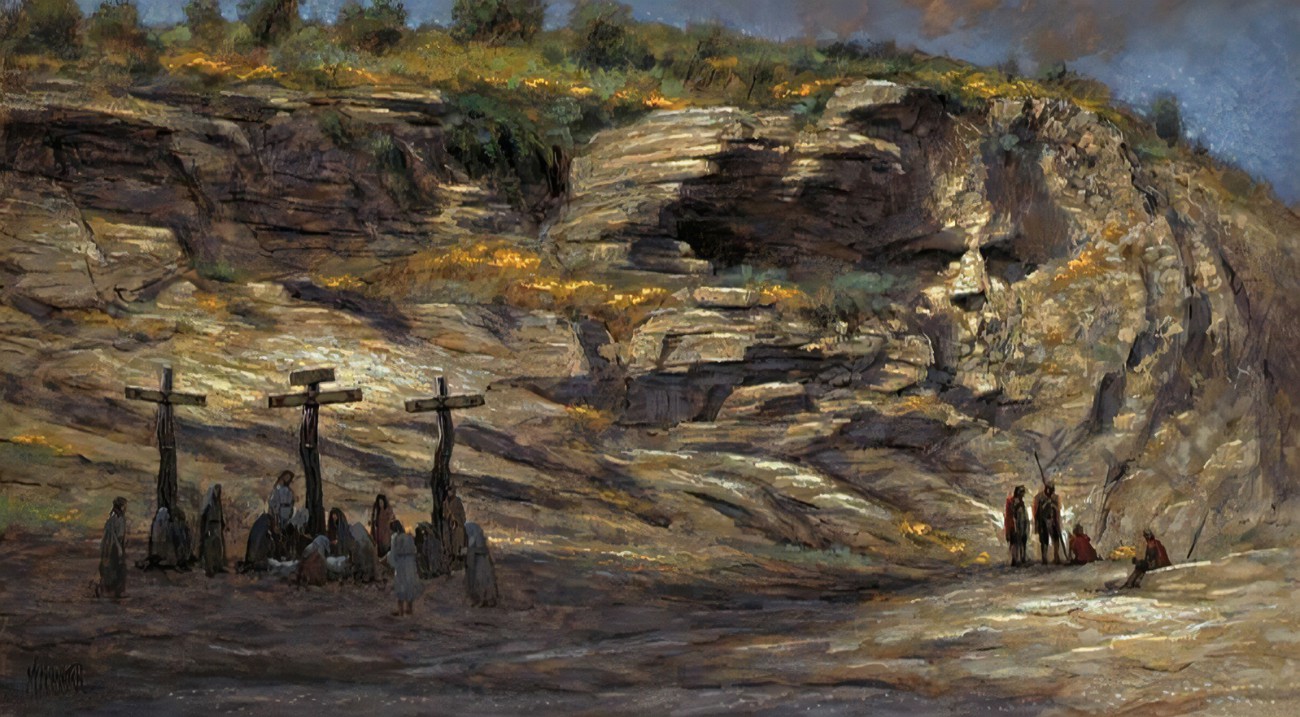
On a hill far away, where the tree of death once stood, now stands the Tree of Life.

The Significance of Jesus as the Passover Lamb on Holy Thursday

Flesh, blood, atonement, love—this is the language of Holy Thursday. Jesus and his disciples find a room to remember Passover, the ancient celebration of Israel’s exodus from Egypt. On that Exodus night, the blood of the lamb spread on the doorposts of the Israelites atoned for their sins and protected them from the wrath of God that was poured out on Egypt.

Now, in an upper room, Jesus positions himself as that Passover lamb about to be sacrificed, whose blood will atone for sin and protect against God’s wrath. While the first Passover and the original (old) covenant focused on national Israel, Jesus expands the second (new) covenant to include all who confess faith in him. Those saved by the blood of Jesus the Lamb become a royal priesthood, “declaring the praises of him who called you out of darkness into his wonderful light” (1 Peter 2:9-10).

The mission of the Church is beautifully intertwined within the events of Holy Thursday. Jesus is the Lamb whose body was sacrificed and whose blood was shed to atone for and forgive the sins of those who confess faith in him. These believers become a movement of priests, declaring the gospel of freedom and taking on the Abrahamic mantle of blessing the nations (Genesis 12).

On Holy Thursday, how do you perceive your calling to share the gospel and bless the people closest to you?

Lessons from Jesus: Trust Amid Uncertainty

The Olivet Discourse is a significant part of Wednesday during Holy Week, found in Matthew 23-26, Mark 13, and Luke 20-21. In Mark’s account, Jesus speaks about the destruction of the Temple and urges his followers to pay attention to the signs of the end of the age. While much of what Jesus discusses in this Discourse is prophetically linked to the destruction of Jerusalem in 70 AD by the Roman Empire, our contemporary American fascination with End Times interpretations can obscure the original meaning of his words. Nonetheless, the Discourse reminds Christians to trust in Jesus and remain steadfast when everything around them falls apart.

This reflection is especially relevant during Holy Week. When Jesus is arrested, his followers flee and become scattered, filled with fear and uncertainty about the future. Their world has been turned upside down. What about you? How do you respond when your life is unexpectedly shaken? Where do you turn when everything seems to collapse? If your refuge isn’t Jesus, you may be standing on sinking sand!