
Resurrection is dangerous! Jesus is not safe. The physical, bodily resurrection of Jesus will challenge you at the very depth of your soul. The resurrection of Jesus changes everything!
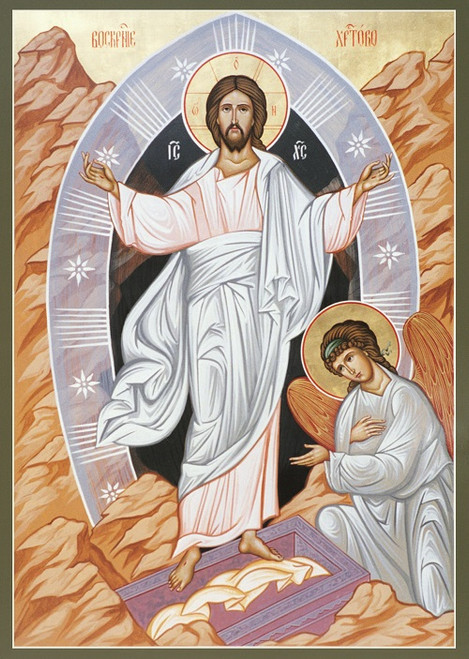
There is an annual event in Australia called the Festival of Dangerous Ideas. A couple of years ago they included a Q&A time with some panelists surrounding the question – “what dangerous idea has the greatest potential to change the world for the better?” Several panelists answered that question in unique but logical ways based upon their worldview. And then the question was directed to Peter Hitchens and his answer clearly startled the others. “The most dangerous idea in human history and philosophy remains the belief that Jesus Christ was the son of God and rose from the dead, and that is the most dangerous idea you will ever encounter.”
The moderator didn’t appear to understand the danger of the resurrection and so asked “why dangerous?” To which Hitchens responded: “Because it alters the whole of human behavior and all our responsibilities. It turns the universe from a meaningless chaos into a designed place in which there is justice and there is hope and, therefore, we all have a duty to discover the nature of justice and work towards that hope. It alters us all. If we reject it, it alters us all as well. It is incredibly dangerous. It’s why so many people turn against it.”
He was right. The physical and bodily resurrection of Jesus from the dead is the most dangerous idea. If true, it changes everything. Chocolate bunnies and marshmallow peeps have no eternal value or significance! Resurrection changes everything. Resurrection isn’t soft and cuddly. Resurrection is dangerous.
I’m afraid we aren’t aware of just how dangerous it is. Christian philosopher Stephen Davis says: “Christians today do not seem to be astonished at the idea of resurrection (after 2000 Easters, we seem to have gotten used to the idea), but we ought to be.” If, as a Jesus follower, the most dangerous idea of all ideas doesn’t rock your world, then maybe your faith is too safe. And if you’re not a follower of Jesus, welcome to Christianity’s dangerous idea!
Paul spent much of his life trying to destroy the dangerous idea of Christianity until he had a life-altering encounter with the resurrected Jesus. He went from killing Christians (ISIS) to being a Christian pastor. In 1 Corinthians he writes about the implications of following Jesus. Paul shows us why resurrection is so dangerous.
The resurrection of Jesus turns the world upside down. Jesus had been arrested, beaten, and executed. One thing the Powers That Be can’t tolerate is being rejected and so they rejected Him! They killed Him. End of story. But then, something extraordinary happened. God said, “Uh, No. That isn’t the end of the story!” And though He was indeed good and dead, God amazingly and graciously resurrected Jesus – back to life!
The guards who’d been posted at the tomb ran to tell the chief priests what had happened. Their lives were in jeopardy for failing to prevent the tomb from being opened. To break the Roman seal that had been placed at the entrance to the tomb was against the Emperor’s law and punishable by death.
Jesus showed Himself to those disciples of His who had run away in fear and when they experienced Him and recognized the nail marks on His hands, they came out of hiding! Until they encountered the Risen Christ, they viewed the world the way others did. But when they saw Him risen and alive, they unlocked the doors, came out, and began turning the world upside down! They knew another reality that was bolder, truer, and stronger than the powers that had been paralyzing them with fear. Jesus had risen!
The resurrection of Jesus deals with the problem of death. One quarter of the gospel accounts focus on the death of Christ. Plenty of other information was left out so that we would grasp the death of Jesus Christ. Jesus did not die as a good example; He did not die because He was a nice martyr; Jesus Christ died for our sins. Sin is a concept one doesn’t hear a lot in our culture today. We hear about illnesses, addictions, and disorders, but we don’t hear much about sin. Yet, the truth is: Jesus Christ died on the cross for the sins of every man, woman, and child that has ever lived. Sin is the reason Jesus went to the cross.
Christ had to die because you and I were in trouble with God. What puts us in trouble with God is our sin. Just so that there is no doubt, let me clarify what sin is: Sin is anything contrary to the character and commandments of God. To boil down this definition even further, sin is merely leaving God out and failing to worship Him properly.
Jesus Christ died for our sins. He was our substitute. A substitute is a person who takes the place of another. We should have died for our sins but Jesus died in our place. Jesus took your place that you might have His place. He took your hell that you might have His heaven. That is His substitutionary death. It is the heart of the gospel. Jesus’ life does not save us. His teaching does not save us. He saves us by His death on the cross. There is no other way to get rid of our sins. The good news of the gospel is that when Christ died for our sins, He died for our past, present, and future sins. He covered all of our sins for all time. Are you having trouble forgiving yourself for sins you have committed? Remember, Christ’s death was sufficient for your sins. His death satisfied God’s wrath against sin.
When you buy something at a store, the clerk accepts your money and gives you a receipt confirming that the bill was paid in full. If there is ever a dispute about whether the payment was made, all you have to do is produce your receipt. The payment for sin that God demanded has been paid, and the empty tomb is proof that the payment was received and the debt satisfied. The resurrection is our “receipt” from God the Father that He accepted His Son’s payment for sin on the cross
In the resurrection of Jesus, God keeps his word. Paul does not try to prove that the resurrection of Jesus actually happened. Instead, he assumes the resurrection as fact. In these verses, he simply wants us to know that Christ has risen from the dead. The gospel still works today. As Christians what we really need is to be reminded of what we already know. We need to preach the gospel to ourselves every day. When we do this, we experience a new surge of life and love for Christ.
Paul reminds his readers of what the gospel is. The term “gospel” means “good news.” This is the message that Paul preached to the Corinthians for the eighteen months he served as their pastor. Paul is writing with the confidence that the Corinthians are believers. “For I delivered to you as of first importance what I also received, that Christ died for our sins according to the Scriptures, and that He was buried, and that He was raised on the third day according to the Scriptures, and that He appeared to Cephas, then to the twelve.” An important phrase immediately jumps out: “according to the Scriptures.” In the Old Testament, God predicted that Christ would die and rise again. One of the strongest arguments that Jesus is the Christ is how He fulfilled Old Testament prophecy.
This gospel was “of first importance” and foundational to everything else in the Christian life. It isa non-negotiable. The reason for this is the gospel did not originate from Paul or any other man; rather it was received from God and then delivered to people. It is God’s gospel, not ours. No one would have ever devised a plan of salvation like this one, for mankind always tries to obtain salvation the old-fashioned way—“to earn it.” But the good news of the Christian gospel is that salvation is a free gift—costly to Christ but free to us.
The resurrection of Jesus requires a response. The great tightrope walker Blondin strung a wire from one side of the Niagara Falls to the other. A crowd gathered to watch him attempt to walk out over the deadly falls. The silent tension turned to cheers as they watched him walk out, turn and come back. He asked the crowd, “How many believe that I can walk to the other side and back while pushing a wheelbarrow?” To which they shouted, “We believe, we believe!” And, Blondin did in fact walk out and back with a wheelbarrow. Upon his return, Blondin asked, “Who believes I could push a man in this wheelbarrow while walking out and back on the wire?” Again the crowd responded with enthusiastic affirmation. “OK,” he asked, “Who would like to get in?” The crowd fell silent.
Trusting Jesus is not simply assenting to the facts of the gospel message, there is a decision that implies actually getting into the wheelbarrow. The proof of the resurrection is its dangerous power to change lives. The gospel centers on Jesus Christ, not Buddha, not Mohammed. God wants to know: what are you going to do with My Son, Jesus? Responses such as: “I go to church every week and I’m a good father or mother” have nothing to do with the gospel. The gospel centers on Jesus Christ. Each of us must give a response to the resurrection. And it may be no! I reject the resurrection. But you’re response may very well be – I believe that God raised Jesus from the dead; I love Jesus and I want to follow him – welcome to the revolution! Your relationship with Jesus changes everything.

 Dr. Ron Geisler